
Age-Related Macular Degeneration (AMD)
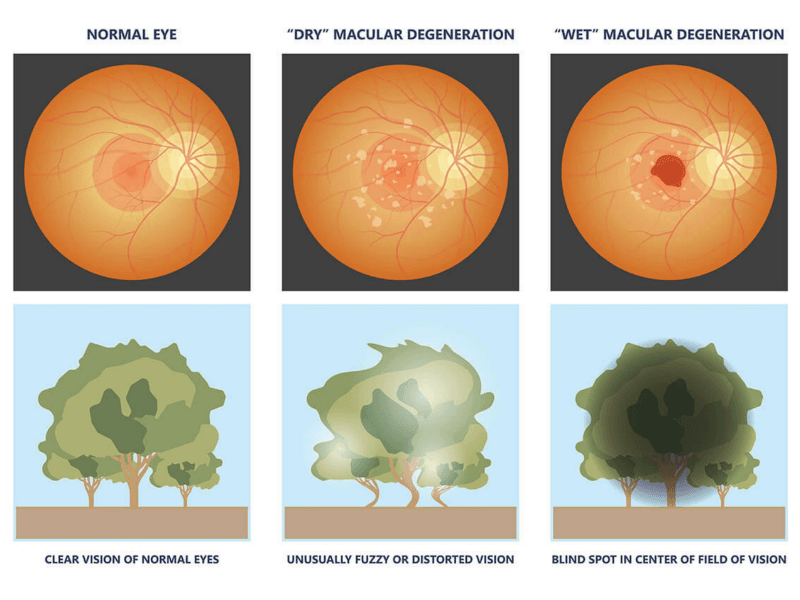
AMD is an age related degenerative eye disease and the leading cause of vision loss in people older than 50. About 18 million people in the US have dry AMD. It affects sharp, central vision and the ability to see fine details. It affects the vision by causing a break down of the retinal cells. The retina is a thin, light sensitive structure in the back of the eye that acts like a sensor. It’s job is to capture light and convert it to signals that are sent to the brain.
Book An Appointment
Age-related Macular Degeneration (AMD) Symptoms
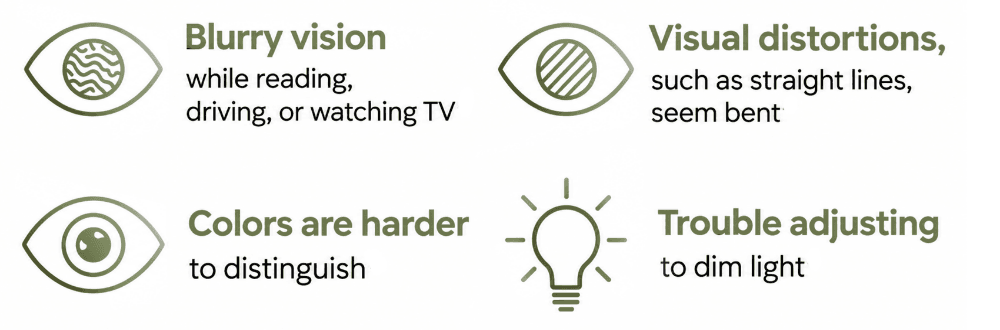
Symptoms of dry AMD can vary based on the severity of macular degeneration, but symptoms may include:
Valeda PBM
Valeda is a light-based treatment system that uses photobiomodulation, or PBM, to deliver specific wavelengths of light to the eye. This non-invasive approach is designed to target mitochondrial dysfunction in the retina, which is considered an important part of dry AMD progression. The goal is to support retinal function and improve visual acuity in eligible patients.
How Valeda Works
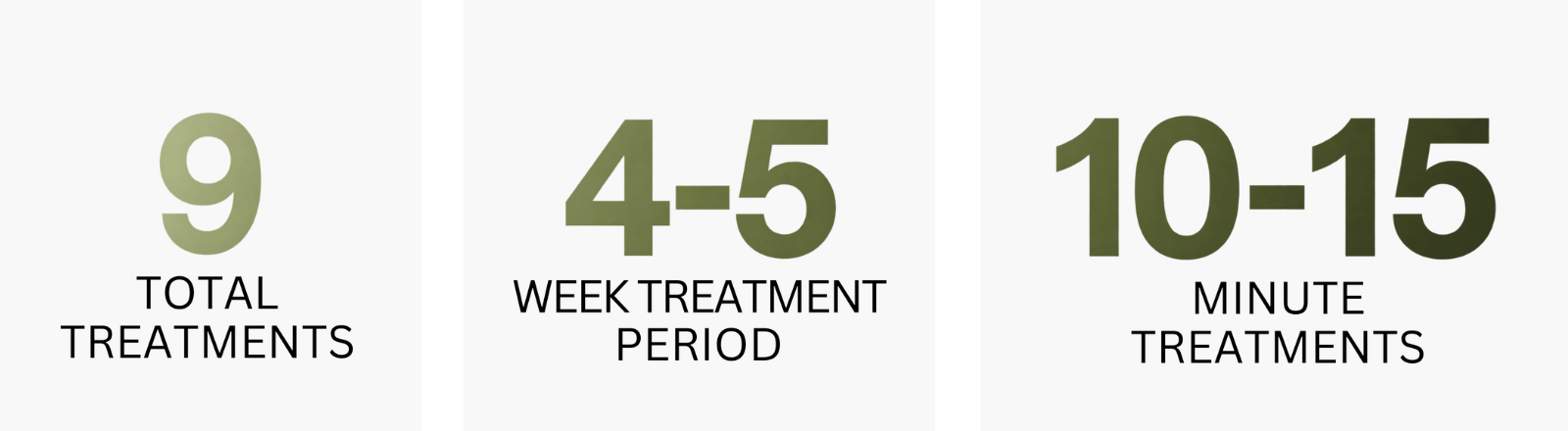
Valeda treatment is performed in a series of 9 sessions per eye over 3 to 5 weeks. Because it is non-surgical and light-based, it offers a different option for patients who may not be candidates for more invasive care or who are looking for an earlier intervention for dry AMD.
This treatment is meant for people with dry AMD who fit certain exam findings. In general, it may be an option for patients whose vision falls within a specific range and who have signs of dry AMD such as medium or large drusen or geographic atrophy that does not affect the center of the retina. It is not meant for patients with wet AMD or geographic atrophy involving the center of the retina.
Treatment Schedule
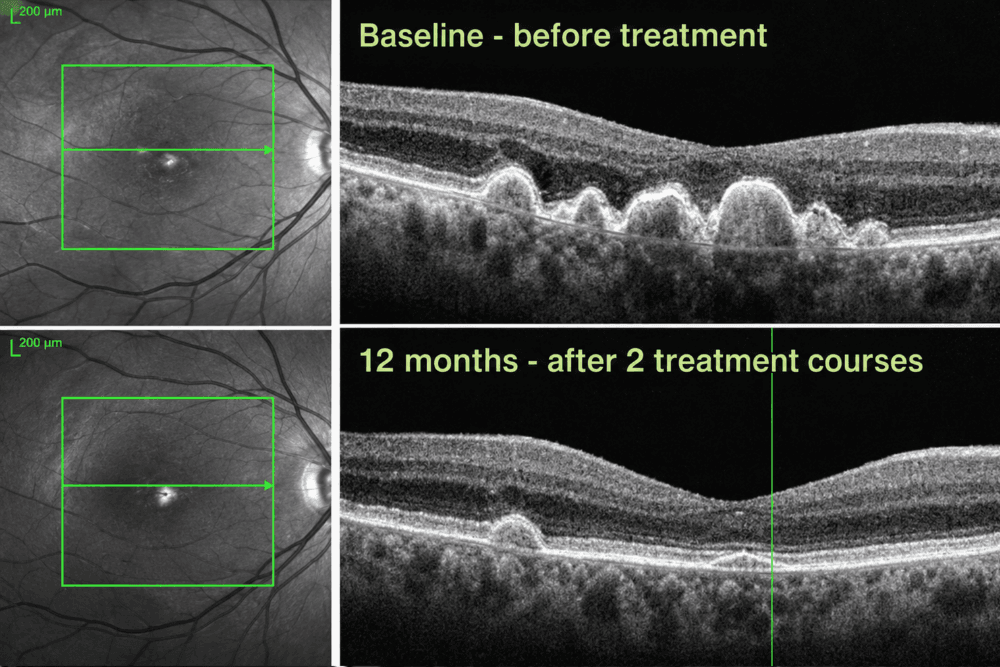
Expected Outcomes of Treatment
- Improved or maintained vision – 84% of Valeda treated patients improved or maintained vision at ~2 years compared to baseline.
- Reduced drusen volume – decreasing macular deposits associated with vision loss.
- Slowed progression of geographic atrophy- with significantly fewer cases of GA compared to baseline.
Why This Matters For Dry AMD Patients
For people living with dry AMD, Valeda offers a reassuring option designed to help preserve the vision they rely on while improving visual acuity when appropriate. By supporting visual function, treatment may help patients continue the everyday activities that matter most and maintain the quality of life they deserve. Because every eye is different, an early evaluation can help determine whether Valeda is right for you based on the stage and specific features of your condition.

Who May Be A Good Candidate
Patients may be considered for Valeda if they:
- Have been diagnosed with dry age-related macular degeneration
- Meet the visual acuity range outlined for treatment
- Show qualifying retinal changes such as drusen or non-central geographic atrophy
- Do not have wet AMD or center-involving geographic atrophy
- Do not have contraindications such as known photosensitivity to the treatment wavelengths
Book An Appointment
Advanced AMD Care In North Mississippi & West Memphis
At Magnolia Eye Group, patients have access to advanced eye care solutions, personalized treatment planning, and experienced providers serving North Mississippi and West Memphis with compassionate, comprehensive care. Our team takes time to evaluate each patient’s vision needs, explain findings clearly, and recommend treatment options based on the specific stage and condition of the eye.

FAQs
Who may be a candidate for Valeda treatment?
Valeda is intended for certain patients with dry age-related macular degeneration (dry AMD) who meet specific vision and retinal health criteria. Because every patient’s condition is unique, a comprehensive eye examination and retinal imaging are required to determine whether treatment is appropriate. Our doctors will review your eye health, discuss your diagnosis, and determine if you are a candidate for treatment with Valeda. (MyAlcon)
Who should not receive Valeda treatment?
As a precaution, Valeda is not recommended for patients with known sensitivity to light or a history of light-activated neurological conditions, such as epilepsy. Patients taking photosensitizing medications should discuss their medications with their physician before treatment. Your doctor will review your medical history and medications to determine whether Valeda is appropriate for you. (Valeda)
What is Valeda?
The Valeda Light Delivery System is an FDA-authorized treatment that uses photobiomodulation (PBM), a non-invasive light therapy, to deliver specific wavelengths of light to the retina. This light is designed to support retinal cellular function and improve visual function in qualifying patients with dry AMD. (Valeda)
What happens during treatment?
Valeda treatments are performed in our office and require no injections, surgery, medications, or eye drops. During treatment, you will sit comfortably at the Valeda device while a trained team member guides you through the process. The treatment delivers specific wavelengths of light to the retina in a series of short treatment phases. Most patients find the treatment comfortable and easy to complete. (Valeda)
Do I need to prepare for treatment?
No special preparation is required. If you wear glasses or contact lenses, you will be asked to remove them before treatment. Your eyes do not need to be dilated for the treatment session. (Valeda)
How long does treatment take?
The active treatment time is less than five minutes per eye. Most appointments are brief, allowing patients to easily fit treatment into their schedule. (Valeda)
How many treatments will I need?
A standard treatment series consists of nine treatment sessions completed over approximately three to five weeks. Treatments are typically scheduled three times per week. Your doctor will discuss the treatment schedule that is most appropriate for your individual condition. (Valeda)
What are the potential benefits of Valeda?
Clinical studies have shown improvements in visual function for many patients with dry AMD, including improvements in visual acuity and other measures of retinal health. Because every patient is different, individual results may vary, and no specific outcome can be guaranteed. (PubMed Central (PMC))
Are there any side effects?
Valeda has demonstrated a favorable safety profile in clinical studies. Some patients may notice a temporary afterimage or changes in color perception immediately following treatment due to exposure to bright light. These effects typically resolve within a few minutes. No treatment-related adverse events were reported in the major clinical trials. (Valeda)
What can I expect after treatment?
Most patients are able to resume their normal daily activities immediately following treatment. You may notice a temporary afterimage immediately after treatment, similar to what occurs after looking at a bright camera flash. This typically fades within minutes. (Valeda)
Can I receive Valeda treatment if I have cataracts?
Many patients with cataracts may still be eligible for Valeda treatment. During your consultation, your doctor will evaluate your eyes and determine whether Valeda is appropriate for your specific situation.
How do I find out if I qualify?
The best way to determine whether Valeda is right for you is through a comprehensive evaluation with one of our doctors. Contact Magnolia Eye Group today to schedule a consultation. We’ll evaluate your macular degeneration, review your retinal imaging, and determine if you’re a candidate for treatment with Valeda.